You Don’t Have Time for an Audit. You Already Paid for a Visit.
Somebody is coming to your house anyway.
That’s the part most homeowners forget. You’re already spending the money, already blocking off the afternoon, already moving the recycling bin so a truck can get in the driveway. And in most cases, that technician walks out having learned nothing about the actual reason you called.
Here’s the thing. A full comfort assessment — room-by-room load calculations, a blower door, a whole morning of labor — is the right answer for a lot of old Huntsville houses. It’s also a real expense and a real day off work. Most people never do it. Fair enough.
But your annual ac maintenance appointment can carry about eighty percent of that same diagnostic weight, for no extra time and often no extra money. It just doesn’t happen automatically. You have to ask, and you have to know what to ask for.
So let’s fix that in the next few minutes.
What a Standard Tune-Up Actually Buys You
Let’s be honest about what’s in the box.
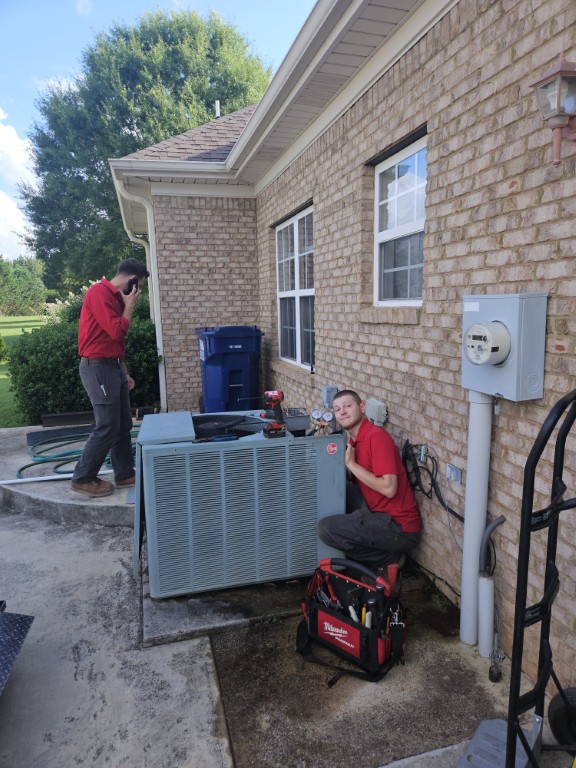
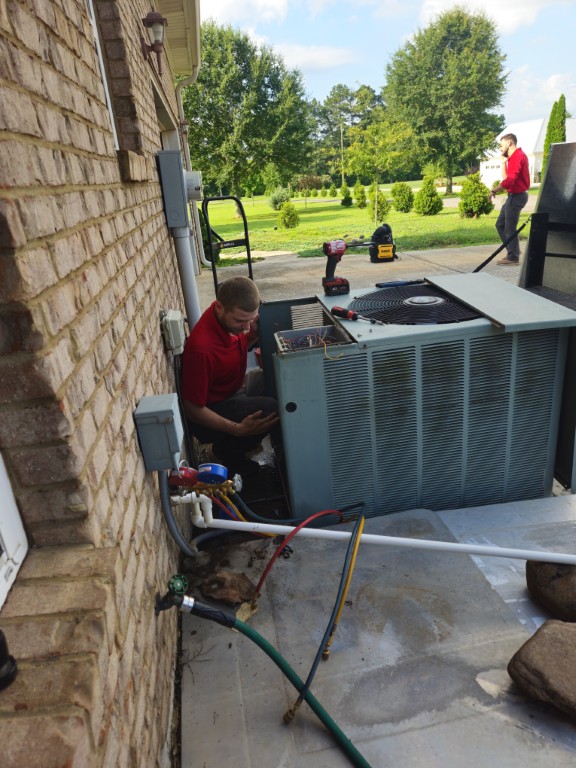
A typical maintenance visit in North Alabama covers the equipment. Wash the outdoor condenser coil. Check refrigerant pressures. Test the capacitor and contactor. Clear the condensate drain, tighten electrical connections, look at the indoor coil if it’s accessible, swap or check the filter.
That’s real work. It genuinely extends equipment life, and skipping it is how a $12 capacitor becomes a $1,400 compressor call in the third week of July.
But notice what’s missing. Every single one of those tasks lives at the equipment. Not one of them tells you why your back bedroom sits at 79 degrees while the hallway hits 72.
Because that’s a distribution question. Different problem, different tools, different discipline entirely.
And it’s frustrating in a way that’s hard to explain to anybody who hasn’t lived it. You did the responsible thing. You booked the maintenance. Guy came, guy washed the coil, guy said everything looks good — and your house is uncomfortable in exactly the same way it was last August. Sound familiar?
You weren’t lied to. You were just sold a service that answers a question you weren’t asking.
The Three Readings That Turn a Tune-Up Into a Diagnosis
None of these take long. A technician with the right gauges can gather all three inside the visit you already scheduled.
Static Pressure: Your Duct System’s Blood Pressure
This is the big one, and it’s the number that separates a real airflow check from a coil rinse.
A technician drills two small test ports at the air handler and reads the pressure before and after. Add them together and you get total external static pressure, measured in inches of water column. Most residential systems are designed for somewhere around 0.5 inches.
Plenty of pre-1980 Huntsville homes read 0.9 or higher.
What does that mean in plain English? Your blower is straining against ductwork that can’t move the air it was designed to move. High static wears out blower motors, freezes coils, and starves the far end of the house. And a brand-new system bolted to that same duct will do the exact same thing, just with a shinier badge on it.
If nobody has ever handed you this number, nobody has diagnosed your ductwork. They’ve serviced your equipment. Those are not the same visit.
The Temperature Split Across the Coil
Simple test. Measure the air going into the return, measure the air coming out of a nearby supply, subtract.
You want roughly 16 to 22 degrees of drop on a typical system. Under 14 usually points toward a charge problem or too much air moving too fast. Over 24 often means not enough air is crossing the coil at all — which sends you right back to the duct conversation.
One number, thirty seconds, and it separates an equipment problem from a delivery problem before anybody starts quoting.
Supply Temperature at the Room That Bothers You
This one’s almost embarrassing in how rarely it gets done.
Have the technician measure air temperature at the register in your problem room, not just at the air handler. If air leaves the coil at 55 degrees and arrives in that back bedroom at 68, you just found thirteen degrees of loss inside your attic or crawlspace. A leak, a gap in insulation, or a run so long it gave up on the way.
Nobody can argue with that number. It ends the conversation.
What You Get at Each Level of Service
| Service level | What it checks | What it can’t tell you | Best for |
| Basic coil cleaning | Outdoor coil, filter, visible debris | Anything about airflow, moisture, or duct condition | Newer systems with no comfort complaints |
| Standard tune-up | Refrigerant pressures, electrical, drain, coil, filter | Why one room stays warm; where conditioned air is going | Equipment reliability and warranty compliance |
| Tune-up plus airflow readings | Everything above, plus static pressure, temperature split, and supply temps at problem rooms | Precise duct sizing and whole-house load math | Pre-1980 homes with original ductwork — most people reading this |
| Full home condition assessment | Room-by-room readings, humidity, distribution balance, photographed duct inspection, remaining life | Nothing much — but it costs a fee and a longer visit | Planning a replacement or buying an unfamiliar house |
| Duct cleaning | Debris and buildup inside the runs | Leakage, restriction, crushed runs, sizing | Air quality complaints, not temperature complaints |
Read that last row twice. Duct cleaning and duct repair get mixed up constantly, and they solve completely different problems. Cleaning a leaking duct just gives you a very clean leak.
The row you probably want is the middle one. It’s the cheapest upgrade in this whole table, and mostly what it costs you is the words coming out of your mouth when you book.
Why This Hits Harder in a House Built Before 1980
Your house has a specific history, and it explains almost everything.
Those duct runs went in when the system was maybe two tons and the family had one television. They’ve since spent five decades in an attic that touches 130 degrees in August, or a crawlspace that stays damp most of the year. Mastic dries out. Cloth tape lets go. Insulation slumps off into the joist bay.
Then a cable installer stepped on a flex run in 1996, and nobody has looked since.
Here’s what stings about crawlspace leaks in particular. A leaking return doesn’t just lose air — it pulls air, from the crawlspace, into your house. That’s the musty smell you’ve been blaming on the dog. It’s also part of why the place feels clammy at 72 degrees when North Alabama summers run near 80 percent outdoor humidity, and it’s the whole reason the indoor air quality side of this trade exists.
You might feel a little defeated reading that. Don’t. Duct problems are frequently the cheapest major fix in the house — a few hundred dollars of sealing and reconnection versus a five-figure system you didn’t need.
Alabama Climate Control has been measuring these exact neighborhoods since 1977, and our service technicians don’t work on commission, so nobody standing in your hallway earns a percentage of what they talk you into.
How to Ask, Without Feeling Like a Difficult Customer
You’re not being difficult. You’re being specific. Technicians generally like specific.
When you book, skip the phrase “it needs a tune-up.” Instead say something closer to: the system runs, but the back bedroom never gets cold, and I’d like static pressure and supply temperatures taken while you’re here.
That one sentence changes the visit. It tells the dispatcher what tools to send and gives the technician permission to spend fifteen extra minutes on the thing that’s actually bothering you.
Then ask for the readings to be written on the invoice. Not summarized as “airflow OK.” Written down as numbers.
Why does that matter so much? Because a single reading is a snapshot, and a reading you can compare to last year is a trend. When static pressure climbs from 0.6 to 0.85 across two summers, something in your system changed, and you’d never know it from a checkbox marked complete.
That’s the standard Alabama Climate Control already works to on the commercial side, where computer rooms, labs and walk-in coolers have to be held inside a tolerance band and nobody in the room accepts a thermostat as proof of anything. Same instruments. Same technicians. Your driveway.
The Honest Exceptions
A few times this approach won’t get you there, and you deserve to hear them up front.
If your uncomfortable space is a converted garage, an enclosed porch, or a bonus room over the garage, the airflow readings may come back perfectly fine while the room stays miserable. No duct repair fixes arithmetic. That room was likely never given the capacity it needed, and the conversation is usually about ductless equipment instead.
If the whole house is struggling, not one room, this isn’t your article either. That points at charge, capacity or a failing component, and it starts with repair diagnostics rather than a maintenance visit.
And if your system is dead in August with a newborn or an elderly parent in the house — stop reading and call somebody. Comfort first. Diagnosis second. Always.
Frequently Asked Questions
Does ac maintenance include an airflow check by default?
Usually not. Standard maintenance is an equipment service: coil, charge, drain, electrical, filter. Static pressure and room-level supply temperatures are separate measurements requiring a manometer and test ports, and most companies only run them when a customer describes a comfort complaint. Which is exactly why you should describe yours when booking rather than after the truck arrives.
How much extra does adding airflow readings cost?
Often nothing, when it’s requested at booking and the technician has time allotted. The ports are permanent once drilled, so every future visit gets faster. Where costs appear is the follow-up — sealing, reconnection, or duct modification — and those should be quoted separately from the maintenance itself, with the readings that justified them attached.
My system is 15 years old. Is maintenance still worth it, or should I just replace it?
Worth it, and here’s the reason people miss. If the ducts are restricted, replacement without duct work reproduces your current complaint at ten times the price. Measure first, then decide. The federal 25C tax credit expired at the end of 2025, but TVA EnergyRight still pays on tune-ups and duct repair — worth checking current offers and rebates before you schedule.
Will skipped maintenance void my manufacturer warranty?
It can. Most parts warranties require documented annual service, and “documented” means dated invoices, not your recollection. If you’re still inside the coverage window with no paper trail, start one this season. You already paid for that coverage inside the equipment price.
Ask for Numbers, Not Adjectives
You don’t need to become an HVAC expert. You need one habit: ask what got measured, and ask for it in writing.
A visit that produces three numbers is worth five that produce a clean coil and a thumbs-up. Those numbers tell you whether your money belongs in the box outside or in the ductwork over your head — and in fifty-year-old Huntsville houses, it’s the ductwork far more often than anyone expects.
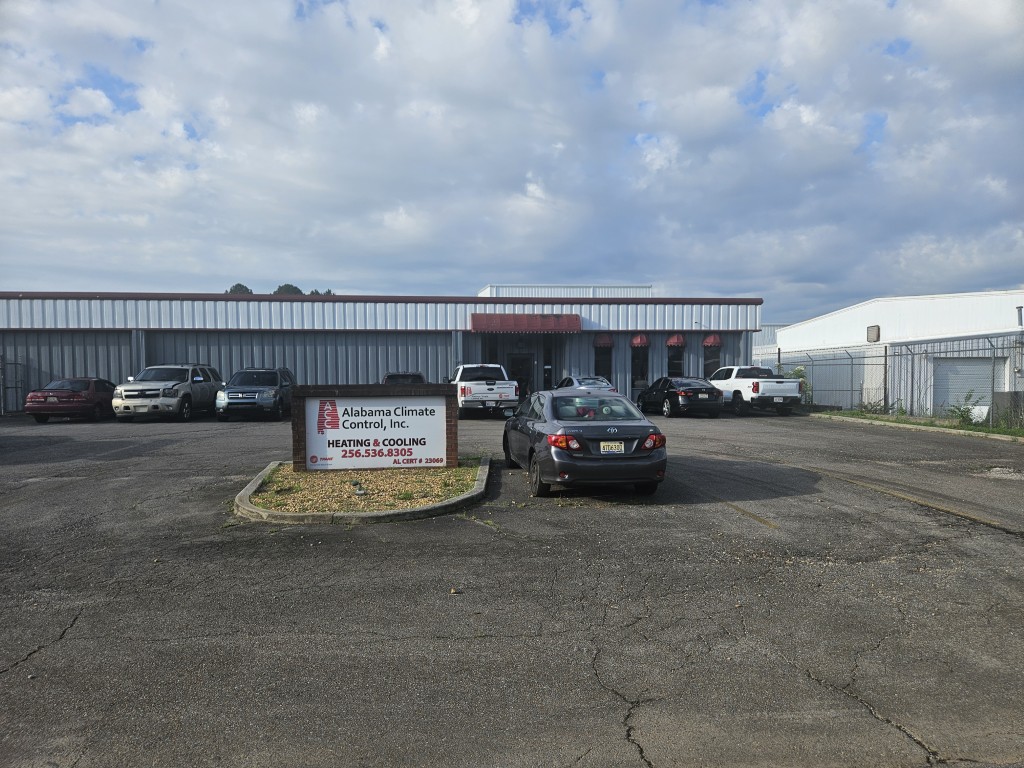
Alabama Climate Control has run that bench out of our Huntsville shop on Wholesale Avenue since 1977, with a team that mostly counts its tenure in decades.
So next time you book, say the sentence. Ask for static pressure, the temperature split, and the supply temperature at the room that’s been bothering you for years. Schedule the visit, ask about financing if a bigger repair is coming, and keep that invoice. Next summer, you’ll have something to compare it to — which is more than most homeowners in this town can say.