It’s 11 p.m., It’s 28 Degrees, and the Furnace Just Quit
Sound familiar? You get home late, the house feels like a refrigerator, and the thermostat says 62 and falling. Now you’re hunting for a repair company, and you can’t take a day off to wait for one.
Here’s the thing. Most of those midnight breakdowns aren’t random. A dirty filter, a gunked-up flame sensor, or a part that wore out quietly all fall is usually the culprit. Furnace maintenance catches these problems while they’re small, cheap, and easy to schedule.
This guide covers what a real tune-up includes, what you can do yourself in ten minutes, and how to fit it all into a packed calendar. We’ll also talk about what to do if you just moved in and have no idea how old your furnace is.
Why North Alabama Furnaces Fail When You Need Them Most
Our winters are short and mild, and that’s exactly the problem. Your furnace sits idle for seven or eight months. Then one cold snap hits and it has to run nonstop on a system that hasn’t been checked since last year, or ever.
Dust settles on parts. Small components get sticky or weak. Then the first 25-degree morning shows up, and something gives.
Does that mean every furnace needs a full overhaul each year? No. The exception is a brand-new system under warranty, which may need less hands-on work in year one. Even then, many manufacturers want proof of annual service to keep the warranty valid, so check your paperwork.
What Furnace Maintenance Actually Includes (and What’s Just Fluff)
You might feel overwhelmed by the checklists some companies hand out. Forty-seven points sounds impressive. But it’s the handful of items that really protect your family and your wallet.
The Parts That Matter Most
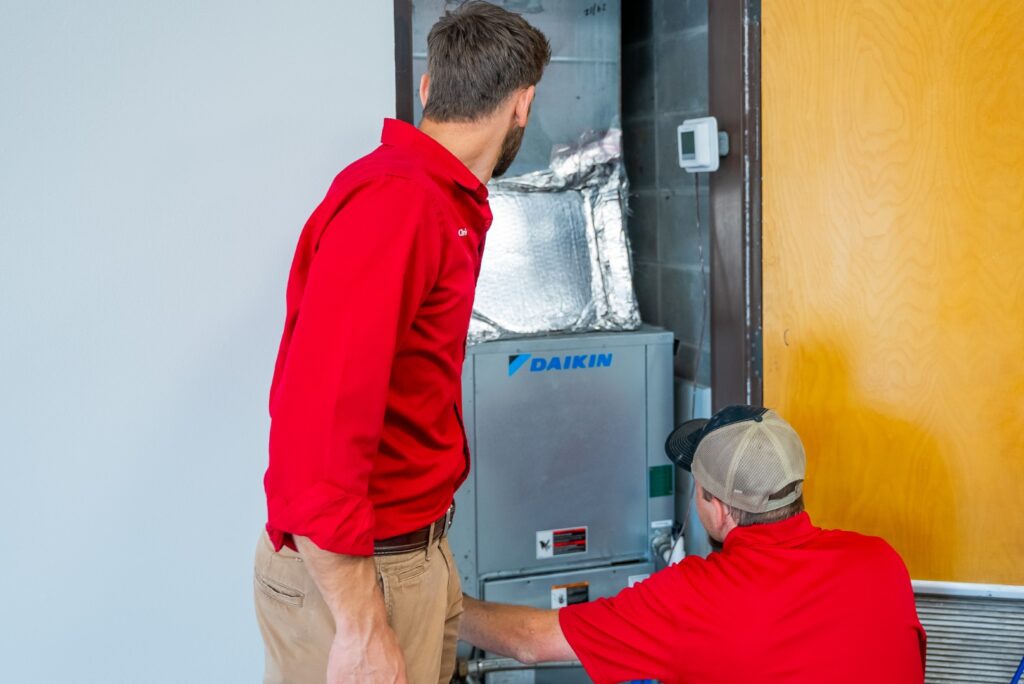
A good technician starts with safety. They inspect the heat exchanger for cracks, since a cracked one can leak carbon monoxide into your home. They check the burners, test the flame sensor, and confirm the venting carries exhaust outside.
Next comes performance. The tech tests the ignition, measures airflow, checks the blower motor, and looks at the thermostat’s response. They also check the electrical connections, because loose wiring is a sneaky cause of repeat shutdowns.
The Parts That Are Mostly Fluff
Be wary of any visit that ends with a long list of “recommended” extras and no explanation. Ask what each one does and what happens if you skip it. A tech who can’t answer simply and plainly is selling, not solving.
Furnace Maintenance Tasks: Who Does What
Some jobs are yours. Others need a trained pro with the right tools. This table sorts them out.
| Task | Who Should Do It | How Often | Why It Matters |
| Replace the air filter | You | Every 1–3 months | Restricts airflow and strains the blower when dirty |
| Clear around the furnace | You | Before winter | Keeps dust and clutter away from burners and vents |
| Test carbon monoxide detectors | You | Twice a year | Your early warning if something goes wrong |
| Inspect the heat exchanger | Licensed technician | Yearly | Cracks can leak dangerous gas |
| Clean the flame sensor and burners | Licensed technician | Yearly | A dirty sensor causes shutdowns and no-heat calls |
| Test ignition and safety controls | Licensed technician | Yearly | Confirms the system shuts off when it should |
| Check blower motor and airflow | Licensed technician | Yearly | Weak airflow means uneven rooms and higher bills |
| Check venting and gas connections | Licensed technician | Yearly | Keeps exhaust out of your living space |
Notice that gas and electrical work sits firmly in the pro column. Don’t open a gas furnace panel to “just take a look.” That’s a job for someone licensed, ideally as part of a regular preventative maintenance routine for your whole system.
The Ten-Minute Weekend Routine for People With No Time
Let’s be real. You work, you have kids or a long commute or both, and “furnace maintenance” is nowhere near the top of your list. Fair enough.
So start small. Set a phone reminder for the first Saturday of each season and swap the filter. Write the size on the filter frame in marker so you never have to guess at the store.
Then walk through the house and make sure every vent is open and uncovered. Furniture blocks more registers than you’d think. Finally, press the test button on each carbon monoxide detector. Done.
That’s it. Ten minutes, and you’ve covered the stuff that quietly wrecks furnaces.
One more thing to watch. If dust keeps showing up right after you change the filter, the culprit may be your ducts. Air duct cleaning or an indoor air quality check can clear it up, and your furnace won’t have to work as hard.
Beating the Weekday Scheduling Problem
Here’s what really stops most people from booking a tune-up. Companies tend to offer appointment windows that line up perfectly with your workday. You’d have to burn a vacation day just to let someone in the door.
A few tricks help. Book in October or early November, before the rush, when schedules are looser and you have more choices. Ask up front whether a technician can work around your calendar, since some homeowners prefer to be home and others can give access to a trusted neighbor or family member. And tell the office how long you need the visit to take, so nobody is guessing.
Ask whether you can pair it with AC maintenance too. One appointment for both systems means one less thing on your calendar.
Maintenance is also the easy appointment. A tune-up can be planned weeks ahead. An emergency repair can’t. That alone is a reason to request service now instead of waiting for a breakdown.
Just Moved In? Your First-Week Furnace Checklist
Relocating households face a special kind of stress. You’re unpacking boxes, learning new streets, and now you’ve inherited a heating system with zero history.
Don’t panic. Start with the basics. Find the model plate on the furnace and snap a photo of it, since the age and model number tell a technician a lot. Ask the sellers or landlord for any service records, even scribbled ones. Then replace the filter right away, because you have no idea how long the old one’s been there.
After that, book a full inspection before the first hard freeze. Think of it as a home checkup. You learn the system’s age, its condition, and what to expect over the next few years, all before something fails.
If some rooms in your new place never get warm, the furnace may not be the problem. Sometimes the ductwork design is the issue, especially in remodeled or newer homes. A good inspection should tell you which it is.
The exception is a furnace that’s brand new or recently inspected as part of the sale. Even then, a quick look from your own technician gives you a baseline you can trust.
Repair or Replace? How to Get a Straight Answer
Nobody wants to hear “your furnace is done.” The fear is real, and so is the worry that you’re being steered toward a big purchase you don’t need.
Here’s a rough way to think about it. Furnaces commonly last 15 to 20 years with good care. If yours is well past that range and keeps breaking, furnace replacement may save money in the long run. If it’s younger and the problem is a single part, heating repair almost always wins.
But here’s what matters most: who’s giving you the advice, and how are they paid? At Alabama Climate Control, technicians don’t earn commission. That means the person in your basement or utility closet has no reason to oversell. They look at your system, show you the numbers, and tell you whether to fix it or replace it. Plenty of companies pay their techs on sales, so it’s worth asking any company you call how its people are compensated.
If replacement does turn out to be the smart move, the price tag doesn’t have to hurt all at once. Look at the available financing options and check for current limited-time offers and rebates before you decide.
Signs Your Furnace Is Asking for Help Right Now
Some warning signs shouldn’t wait for your annual visit. Strange banging, squealing, or rattling means something’s loose or worn. A yellow or flickering burner flame, instead of a steady blue one, can point to a combustion problem. Rooms that heat unevenly, a sudden jump in your gas bill, or a furnace that keeps cycling on and off all suggest trouble.
If you spot any of these, don’t wait. Schedule a furnace repair visit before a small issue becomes a no-heat night.
And if a carbon monoxide detector goes off, leave the house and call for help right away. Don’t try to figure it out yourself.
Notice a pattern? Your furnace usually whispers before it screams. Catching that whisper is the entire point of maintenance.
Why Choose Alabama Climate Control for Your Tune-Up
Since 1977, Alabama Climate Control has helped North Alabama families keep their homes comfortable. The company holds a 5.0 rating across more than 400 reviews, and its team includes long-tenured technicians, like Jason Bridges, who has been there more than 20 years. You can read more about who we are and how the team works.
That experience shows up in how a visit feels. You get plain answers, clear pricing, and no pressure. For busy professionals and new arrivals who don’t have time to research every contractor, that’s a relief.
The team serves Huntsville, Florence, and many towns in between. You can request service online or call (256) 536-8305 to ask about scheduling.
Think of Alabama Climate Control as the home care problem solver you call before the problem gets big.
Frequently Asked Questions
How often should I schedule furnace maintenance?
Once a year, ideally in early fall before heating season starts. Annual service keeps safety components working and helps you catch small issues early. Change your filter every one to three months in between.
How long does a furnace tune-up take?
Most visits run around an hour for a standard system, though it varies with the furnace’s age and condition. If the technician finds a problem, repairs can add time. Ask when you book so you can plan your day.
Is furnace maintenance worth it if my furnace seems fine?
Yes. A furnace can run while hiding a cracked heat exchanger, a failing sensor, or weak airflow. You can’t see those problems from the living room. A yearly check is cheaper than an emergency repair and gives you a safety check too.
Can I do furnace maintenance myself?
You can handle the easy items: replacing filters, clearing space around the unit, and testing CO detectors. Leave burners, gas lines, electrical parts, and the heat exchanger to a licensed technician. Those jobs involve real safety risks.
Don’t Wait for the Cold to Decide for You
Furnace maintenance isn’t glamorous. It’s a small, smart habit that prevents the worst kind of night: cold house, long wait, surprise bill.
To recap, swap your filter on a schedule, test your CO detectors, and book a professional tune-up every year. If you’re new to town, get that first inspection done before the freeze arrives. And whenever someone recommends a big repair or replacement, ask how they’re paid.
Ready to cross this off your list? Book your furnace maintenance visit with Alabama Climate Control today, explain your schedule, and get a straight answer about your furnace. Your future self, warm and comfortable at 11 p.m., will thank you.